PERFORMANCE MARKETING
Turn ad spend into measurable growth through smarter targeting, stronger campaigns, and data-driven decisions.
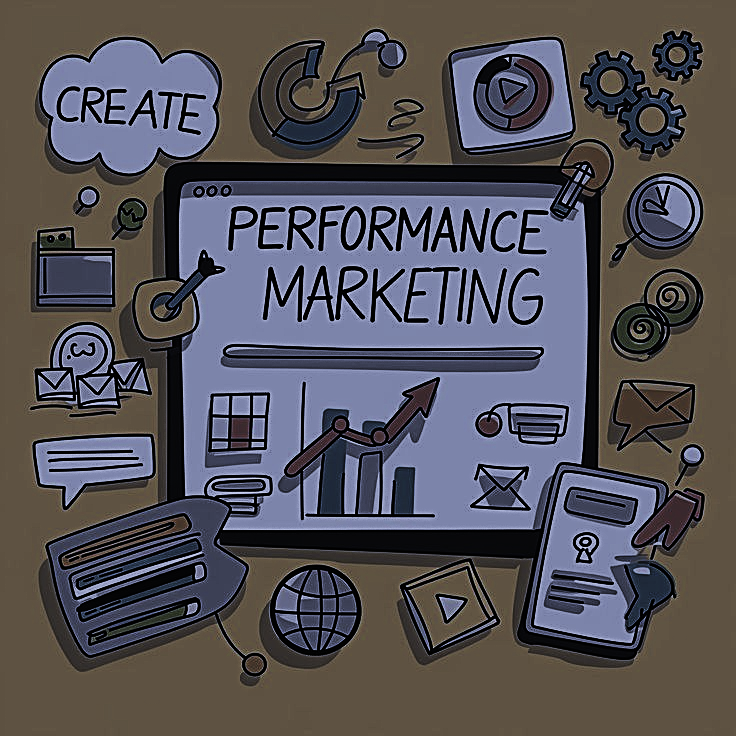
You can reach thousands of people and still struggle to generate meaningful business results.Performance marketing takes a different approach. Instead of treating visibility as the finish line, it focuses on measurable actions — whether that means generating leads, driving sales, increasing enquiries, bringing qualified traffic, or encouraging a specific conversion.
My approach combines audience research, campaign planning, creative direction, targeting, conversion thinking, and performance analysis to create campaigns that can be measured, understood, and improved. Because the goal isn’t simply to spend more on advertising. It’s to make every decision behind that spend more intentional.
From Campaign Setup to Continuous Improvement
Research
Understand the market, audience, competitors, offer, and customer journey before putting budget behind a campaign.
Define
Set a clear campaign objective and identify the actions that actually matter to the business.
Build
Develop the campaign structure, audience targeting, messaging, creative direction, and conversion path.
Launch
Put the strategy into action with properly structured campaigns and measurable tracking.
Measure
Look beyond surface-level numbers and identify which audiences, creatives, messages, and campaigns are producing meaningful results.
Optimize
Test, refine, and reallocate based on performance so the campaign becomes more efficient over time.
Why Data Comes Before Decisions
Because Guesswork Gets Expensive
Paid advertising gives you something traditional marketing often cannot — immediate feedback. You can see what people clicked, what they ignored, which audiences responded, which creatives attracted attention, and where potential customers dropped off. But data only becomes useful when you know what to do with it.
That’s why I don’t look at performance metrics simply as numbers on a dashboard. I use them as signals that help answer better questions:
- What’s working?
- What’s not?
- Why might that be happening?
- And what should we change next?
The objective isn’t to chase every number. It’s to turn campaign data into better marketing decisions.
Why Performance Marketing?
Because Marketing Should Be Measurable.
Spending money on ads is easy. Knowing who to reach, what to say, where to invest, and what is actually working is what makes performance marketing different.
Performance marketing connects your audience, campaigns, budget, creative, and results into one measurable approach.
Instead of running ads based on assumptions, it helps you test, learn, optimize, and make better decisions using real performance data.
The goal isn’t to spend more.
Know exactly who the campaign is trying to reach and what motivates them to act.
Define the business outcome before choosing the campaign strategy or measuring success.
Develop visuals, copy, hooks, and offers designed to earn attention and encourage action.
Connect the campaign with relevant audiences using the right targeting approach for the platform and objective.
Make the journey from advertisement to action clear, relevant, and as frictionless as possible.
What is performance marketing?
Performance marketing is a measurable approach to digital marketing where campaigns are planned around specific business outcomes such as leads, sales, enquiries, website actions, or other conversions.
Is performance marketing the same as running paid ads?
Not exactly. Paid advertising can be part of performance marketing, but performance marketing goes beyond launching advertisements. It involves defining objectives, understanding the audience, tracking results, analysing performance, and continuously improving the campaign.
Which platforms can be used for performance marketing?
The right platform depends on the audience, business model, campaign objective, and customer journey. Platforms such as Google Ads and Meta Ads can be useful in different situations, but the strategy should determine the platform rather than the other way around.
What kind of businesses can benefit from performance marketing?
Many types of businesses can use performance marketing, including service businesses, e-commerce brands, education businesses, local businesses, and other organisations with a measurable customer journey. The appropriate campaign structure depends on the business and its objectives.
How do you decide how much should be spent on advertising?
There isn’t one budget that works for every business. Budget decisions should consider the objective, audience size, offer, market, expected customer value, testing requirements, and available resources. Campaign performance can then provide evidence for future budget decisions.
What metrics do you track?
The metrics depend on the campaign objective. They can include impressions, reach, clicks, CTR, CPC, leads, conversion rate, cost per lead, purchases, cost per acquisition, and return on ad spend. The important part is connecting the metric to the actual business objective.
How long does it take to see results from a campaign?
There is no universal timeline. Results can vary based on the industry, offer, audience, budget, competition, creative quality, conversion journey, and campaign objective. Early data can provide useful signals, while meaningful optimization generally requires enough data to identify reliable patterns.
Can you improve a campaign that is already running?
Yes. An existing campaign can be reviewed to identify potential issues with targeting, creative, messaging, budget allocation, conversion tracking, landing pages, or other parts of the customer journey. From there, improvements can be tested based on the available data.